
Frequently Asked Questions:
1. Why don't you accept insurance?
Answer:
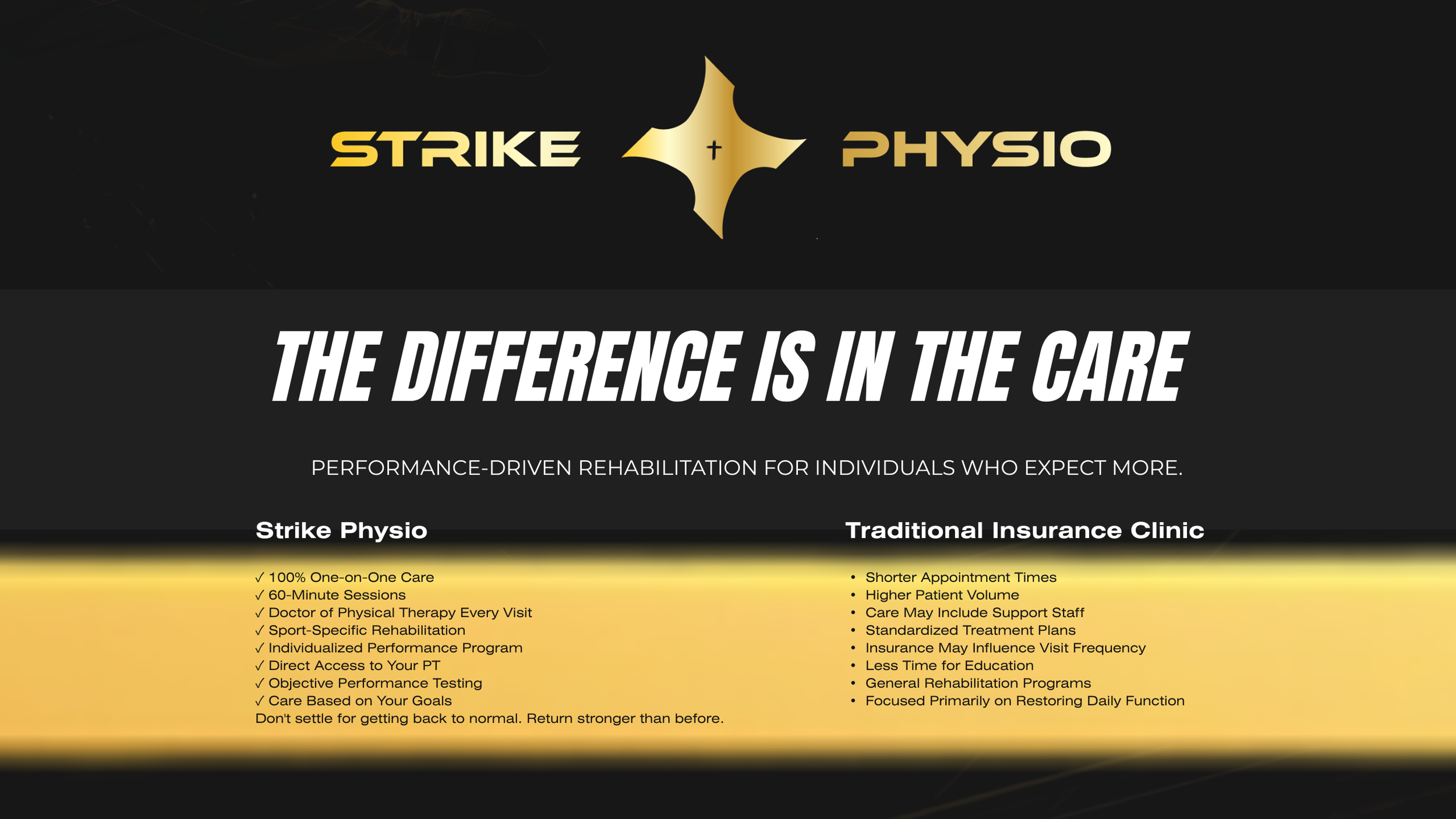
Insurance often limits the amount of time, number of visits, and type of care you receive. At Strike Physio, every treatment plan is based on your goals—not insurance restrictions. This allows us to provide longer one-on-one sessions, individualized treatment, and performance-focused rehabilitation.
2. Can I still use my insurance?
Answer:
Yes. While we are an out-of-network provider, many patients are able to use their out-of-network benefits or HSA/FSA funds. We can also provide a superbill that you may submit to your insurance company for potential reimbursement.
3. What makes Strike Physio different?
Answer:
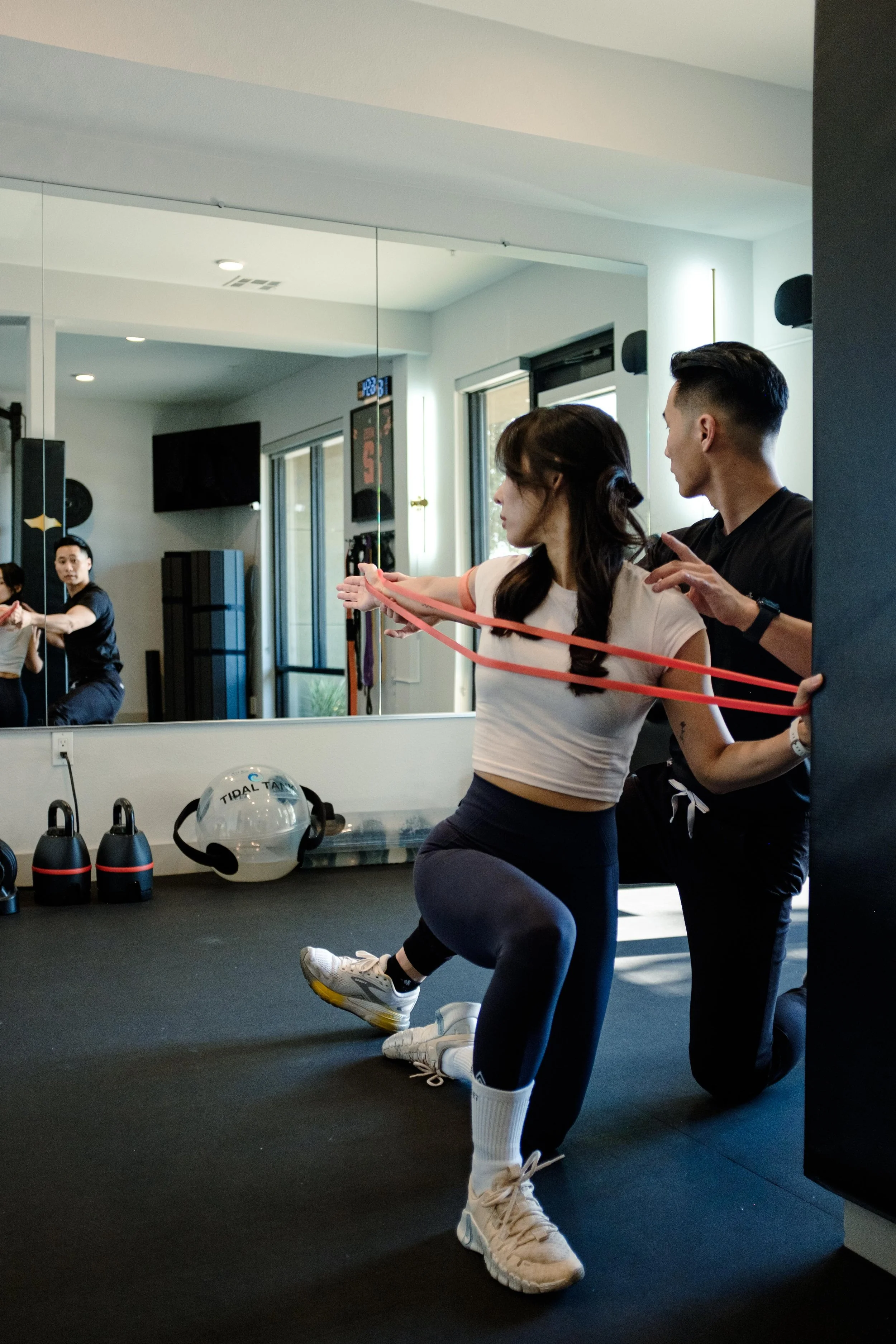
Unlike many traditional clinics, every visit is one-on-one with a Doctor of Physical Therapy. We combine hands-on treatment, strength and conditioning principles, movement analysis, and sport-specific rehabilitation to help you recover and perform at your highest level.
4. Do I need a doctor's referral?
Answer:
In California, most patients can begin physical therapy through Direct Access without first seeing a physician. If your situation requires a referral, we'll let you know and help guide you through the process.
5. How long are appointments?
Answer:
Initial evaluations are approximately 60 minutes. Follow-up visits are also 60 minutes, allowing adequate time for assessment, treatment, exercise progression, and education.
6. Do you only work with injured athletes?
Answer:
No. We also work with athletes looking to improve performance, prevent injuries, optimize movement, and prepare for competition.
7. What injuries do you treat?
Answer:
We commonly treat:
ACL injuries
Meniscus injuries
Knee pain
Hip pain
Ankle sprains
Achilles injuries
Shoulder pain
Rotator cuff injuries
Low back pain
Neck pain
Tendinopathy
Sports injuries
Post-operative rehabilitation
Overuse injuries
8. How many visits will I need?
Answer:
Every injury is different. After your evaluation, we'll provide a clear plan of care, expected timeline, and recommendations based on your goals and current condition.
9. Do you offer performance training?
Answer:
Yes. We bridge the gap between rehabilitation and performance by incorporating strength training, mobility, movement analysis, power development, and return-to-sport programming.
10. What should I expect at my first visit?
Answer:
Your first session includes a comprehensive movement assessment, discussion of your goals, diagnosis review, hands-on treatment when appropriate, and a personalized plan to guide your recovery.
11. How do I schedule?
Answer:
Submit your contact form online or contact us directly. We'll help determine the best evaluation option based on your goals and answer any questions before your first visit.
12. Is cash-based physical therapy worth it?
Answer:
Many patients find that receiving longer, individualized one-on-one care helps them progress more efficiently and with greater confidence than shorter, insurance-driven visits. Our focus is on delivering the right care—not simply more visits.
Examples of What We Treat (And more…):
Neck Pain & Stiffness – including whiplash, posture-related pain, and tension headaches.
Back Pain & Sciatica – from everyday aches to herniated discs and nerve pain.
Shoulder Pain – rotator cuff issues, frozen shoulder, impingement, SLAP tears, and general stiffness.
Knee Pain – arthritis, sports injuries, meniscus tears, or patellofemoral pain.
Hip Pain – bursitis, hip labral tears, arthritis, and tightness.
Elbow, Wrist, & Hand Pain – tennis elbow, carpal tunnel, sprains, and repetitive strain injuries.
Ankle & Foot Pain – plantar fasciitis, Achilles tendon issues, sprains, and general foot pain.
Sports Injuries – strains, sprains, overuse injuries, and performance optimization.
Post-Surgical Rehab – after joint replacements, ligament repairs, or spine surgery.
Balance & Fall Prevention – including dizziness, vertigo, and unsteady walking.
TMJ/Jaw Pain – jaw clicking, grinding, headaches, and facial pain.
Posture & Ergonomic Issues – helping with work-related pain and improving movement.
Chronic Pain – fibromyalgia, complex pain, and movement re-education.
Pediatric & Adolescent Injuries – growth plate issues, sports injuries, and posture.
Performance & Movement Optimization – for athletes and active adults.
